Missed the spray? 🎯
Fix Your BGMI Aim
A better aim is not just about fast fingers. It comes from repeatable practice, sensible sensitivity, recoil control and smart positioning. Use this beginner-friendly guide to build a routine that helps in real matches.
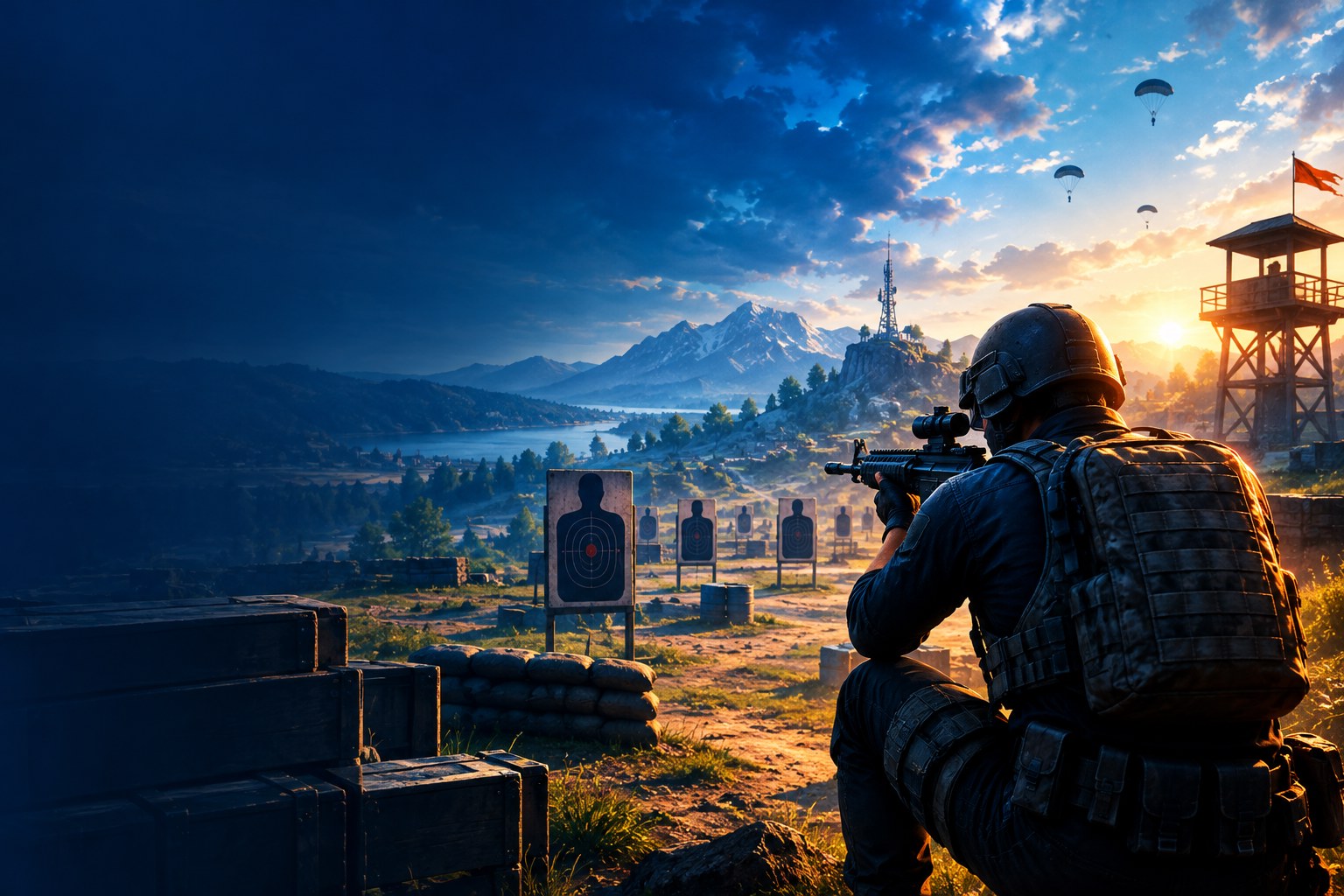

Original illustrative gaming artwork created for this guide.
Ever hit the first few bullets and then watch the rest fly over an opponent’s shoulder? You’re not alone. Many players change their settings after every bad fight, but constant changes make it difficult to build muscle memory. Practise one skill at a time and judge progress over several sessions.
Quick rule: choose comfortable settings, practise deliberately for 15–20 minutes, and change only one thing at a time. No single sensitivity code works perfectly for every phone and player.
⚡ The 10-step aim improvement plan
Find a natural sensitivity
Start with your current camera, ADS and gyroscope settings if they feel comfortable. Track moving targets and make small adjustments. If you overshoot repeatedly, lower the relevant sensitivity slightly; if you cannot keep up, raise it a little.
Warm up before ranked matches
Spend five minutes tracking targets, then practise short bursts and controlled sprays. Finish with a few target transitions. Focused practice is more useful than mindless firing.
Learn recoil control
Choose a familiar automatic weapon and practise at a fixed distance. Fire a short burst, observe the pattern, then compensate gradually. Recoil changes with attachments, stance and range, so practise with your usual setup.
Keep your crosshair ready
When moving around buildings or cover, keep your aim around the height where an opponent’s upper body may appear. Avoid staring at the ground and dragging your aim upward during a fight.
Peek with a plan
Do not stand in the open to finish a spray. Peek, fire a controlled burst, return to cover and reposition when needed. Avoid repeating the same peek from the same angle.
Make your controls comfortable
Your layout should let you aim, shoot and move without awkward finger stretches. Change it gradually and practise in unranked matches before relying on it in competitive games.
Master a few weapons
Learn two or three weapons you enjoy using. Practise their effective ranges, reload timing and recoil. Familiarity lets you focus on the fight rather than remembering each weapon.
Move between shots
Standing still makes you an easier target. Use deliberate strafing and reposition between bursts, but avoid random movement that throws off your own aim.
Review why you lost
Ask whether the problem was aim, positioning, exposure, timing or awareness. If you record gameplay, review the seconds before the fight too. The mistake often begins before the first bullet is fired.
Stay consistent for a week
Keep a stable setup long enough to learn it. Track whether your crosshair stayed on target or your first burst connected. Do not judge progress from one lucky or unlucky match.
📊 A simple 20-minute practice routine
Use this routine before a session. Take a break if your hands or eyes feel strained.
| Time | Practice | Focus |
|---|---|---|
| 0–5 min | Tracking moving targets | Keep crosshair steady |
| 5–10 min | Short bursts and sprays | Control recoil smoothly |
| 10–15 min | Target switching | Avoid overshooting |
| 15–20 min | Peek and cover drills | Reduce exposure time |
⚙️ Settings: what should you change first?
There is no universal best sensitivity. Screen size, frame rate, grip, finger layout and gyro habits all make a difference.
| What you notice | What to test |
|---|---|
| Crosshair goes past the target | Try a small sensitivity reduction for the control you use. |
| Crosshair feels slow | Try a small increase and retest tracking. |
| Spray climbs too much | Practise compensation and adjust ADS or gyro gradually. |
| Aim changes when touching the screen | Check accidental finger contact, layout spacing and grip. |
| Gameplay stutters | Prioritise stable performance and comfortable frame-rate settings. |
Important: write down your original settings before experimenting. Change one value at a time so you know which change helped.
🚫 Common mistakes that hold players back
- Copying another player’s sensitivity without testing it.
- Changing sensitivity after every loss.
- Using a long spray at every distance.
- Ignoring cover, sound cues and the zone.
- Practising only in Training Grounds without applying skills in matches.
- Playing too long when tired or frustrated.
🗓️ Your 7-day improvement challenge
Days 1–2 · Build control
Choose your main weapon and stable settings. Practise tracking and short sprays without constantly changing values.
Days 3–4 · Add movement
Practise tracking while moving, then use cover and peeking in unranked matches.
Days 5–6 · Play deliberately
Before each fight, identify cover and likely enemy positions. Afterward, note one success and one improvement.
Day 7 · Review progress
Compare your control and decisions with day one. Keep what feels consistent and adjust only when you identify a clear issue.
❓ Frequently asked questions
Should beginners use gyroscope?
Gyroscope can help with fine aim and recoil adjustments, but it takes practice. Start with comfortable settings in Training Grounds and build up gradually. It is not compulsory.
How long does it take to improve aim?
It varies by player and current habits. A short daily routine can help you become more consistent over time, but there is no guaranteed timeline or instant fix.
Should I use a pro player’s sensitivity?
Use pro settings as a starting point for experiments, not as a perfect solution. Devices, controls and personal comfort can make the same numbers feel very different.
Is headshot aim only about sensitivity?
No. Crosshair placement, timing, target movement, positioning and practice all matter. Sensitivity is only one part of the skill.
Editorial note: BGMI settings and game behaviour can change with updates. Treat settings as personal starting points and follow the game’s rules and fair-play policies.